
Strong bones quietly support us every day, yet we rarely think about them until a sudden fall or fracture reminds us how important they are. Bone loss can happen slowly without clear signs, making it easy to miss in its early stages. That’s why paying attention to bone health early can make a big difference in staying active and independent.
A DEXA scan is a simple and reliable test that helps detect weak bones before serious problems occur. It measures bone density and can spot early thinning, even before symptoms appear. With this early insight, people can take steps like improving their diet, exercise, and treatment to protect their bones and prevent future fractures.
What Are Weak Bones?
Weak bones mean that the bones have lost some of their strength and density. Healthy bones are strong and solid, but when bone density becomes low, they turn more fragile and can break more easily. This change usually happens slowly over time, often as a natural part of aging or due to lifestyle factors like poor nutrition or lack of exercise.
There are conditions linked to weak bones, such as osteopenia and osteoporosis. Osteopenia is an early stage where bone density is lower than normal but not too severe. Osteoporosis is more serious, where bones become very thin and brittle, increasing the risk of fractures even from minor falls or simple movements.
One of the biggest challenges with weak bones is that they often show no early symptoms. You may feel perfectly fine and not notice any changes. This is why regular check-ups and early screening are helpful, as they can catch bone loss early and allow you to take steps to keep your bones strong and healthy.
What Is a DEXA Scan?
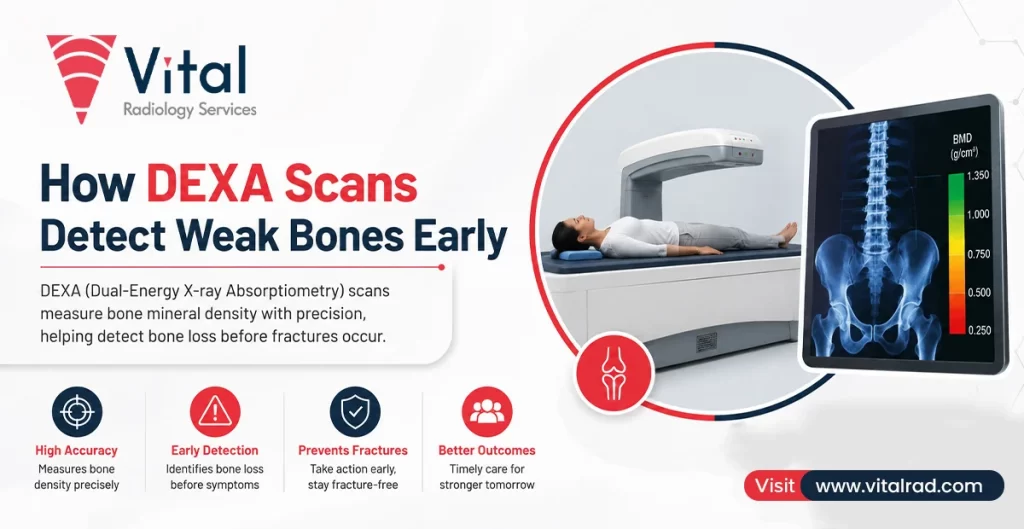
A DEXA scan, which stands for “dual-energy X-ray absorptiometry,” is a special test used to measure bone strength. It works by using very low-dose X-rays to check how dense or solid your bones are. The scan is quick, painless, and does not require any special preparation. It usually focuses on important areas like the hip and spine and sometimes the forearm, where fractures are more likely to happen.
What makes a DEXA scan different from regular X-rays is its accuracy. While normal X-rays can only show major bone damage, a DEXA scan can detect even small changes in bone density. This helps doctors find early signs of bone loss before it becomes serious, allowing people to take timely steps to protect their bone health.
How DEXA Scan Detects Bone Loss Early
A DEXA scan helps identify bone loss at an early stage, making it easier to take action before serious problems develop.
- It measures bone mineral density (BMD), which shows how strong and solid your bones are. Lower density means bones may be weaker and more likely to break.
- The results are compared with standard reference values using something called a T-score. This score helps doctors understand whether your bones are normal, slightly weak, or at risk.
- It can detect small changes in bone strength long before any pain or injury occurs, which is something regular tests may miss.
- The scan acts as an early warning system for conditions like osteoporosis, helping people start treatment or lifestyle changes sooner.
With this early detection, you can improve bone health through diet, exercise, and medical advice, reducing the chances of fractures later in life.
Who Should Get a DEXA Scan?
A DEXA scan is recommended for people who may be at a higher risk of developing weak bones, even if they feel healthy. These include:
- Women above 45–50 years, as bone density naturally starts to decline with age, increasing the risk of bone loss over time.
- Postmenopausal women, because the drop in hormone levels after menopause can speed up bone weakening.
- Men above 60 years or those with risk factors such as low body weight, smoking, or a family history of fractures.
- People with calcium or vitamin D deficiency, since these nutrients are essential for maintaining strong and healthy bones.
- Patients taking long-term steroid medications, which can reduce bone strength when used for extended periods.
- Individuals with chronic illnesses like thyroid disorders or kidney disease may be affected by bone health.
Getting tested at the right time helps detect problems early and supports better bone care.
Advanced Diagnostic Support and the Role of Vital Radiology India
Accurate diagnosis of bone health depends greatly on the quality of imaging and reporting. A well-performed scan alone is not enough; it must be supported by clear and careful interpretation. This helps doctors understand the condition of the bones and decide the next steps for treatment or prevention.
Vital Radiology India offers DEXA scanning using advanced imaging technology designed to give precise and reliable results. The equipment used ensures accurate measurement of bone mineral density, which is important for identifying even small changes in bone strength at an early stage.
With proper reporting and detailed analysis, Vital Radiology India supports doctors in making informed decisions. This plays an important role in early detection of bone loss and timely clinical evaluation, helping patients take the right steps to maintain strong and healthy bones.
Benefits of Early Detection Through DEXA Scan at Vital Radiology India
Early detection through a DEXA scan at Vital Radiology India helps people take control of their bone health before problems become serious. Here are some useful benefits:
- Early screening helps find weak bones before they cause sudden fractures, giving people more confidence in their daily activities.
- It allows timely treatment and better clinical care, as doctors can guide patients with the right medicines, supplements, and follow-up plans.
- The results support better lifestyle and diet choices, helping individuals include calcium-rich foods, proper nutrition, and regular physical activity.
- Regular scans make it easier to monitor bone health over time, so any changes can be tracked and managed without delay.
- Early detection lowers the risk of long-term bone problems, including severe bone loss and repeated injuries that may affect quality of life.
- It also helps identify the risk of osteoporosis at an early stage, even before symptoms appear, allowing people to take preventive steps and maintain stronger bones for years to come.
What Happens After a DEXA Scan?
After a DEXA scan, the results help guide the next steps for keeping your bones healthy and strong.
- The scan results are usually shared as categories such as normal, osteopenia, or osteoporosis. Normal means your bones are healthy, osteopenia shows mild bone loss, and osteoporosis indicates weaker bones with a higher risk of fractures.
- Doctors carefully interpret these results along with your age, medical history, and lifestyle. This helps them understand your overall bone health and decide what care you may need.
- If bone loss is found, doctors may suggest calcium and vitamin D supplements to improve bone strength and support daily needs.
- In some cases, medications may be prescribed to slow down bone loss or help build stronger bones over time.
- Lifestyle changes are also important. This may include regular weight-bearing exercise, better nutrition, quitting smoking, and reducing alcohol intake.
Follow-up scans may be recommended after some time to check progress and ensure the treatment plan is working well.
Conclusion
Taking care of your bones early can prevent many problems later in life. Weak bones often develop quietly, without clear signs, which makes early detection very important. A DEXA scan is a simple and painless way to check bone strength before serious issues like fractures occur. It gives clear information that helps you and your doctor take the right steps at the right time.
Instead of waiting for symptoms, it is wise to be proactive about your bone health. Timely screening can help you make small but effective changes in your diet, lifestyle, and treatment if needed. By acting early, you can stay active, reduce risks, and maintain strong bones for years to come.