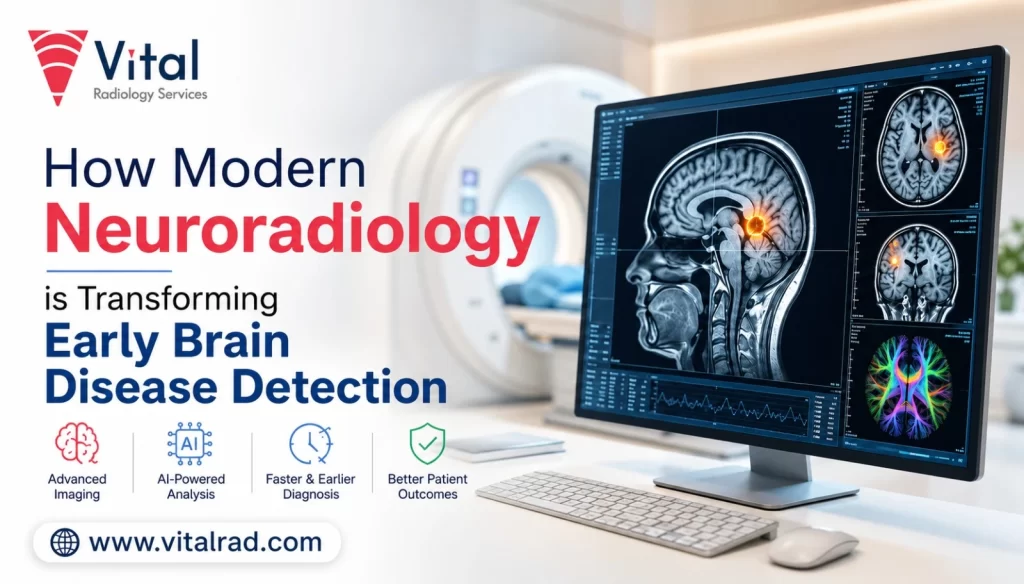

Neurological disorders are increasing worldwide, affecting millions of people across all age groups. Conditions like stroke, Alzheimer’s disease, and brain tumors are becoming more common due to aging populations and changing lifestyles. This growing burden makes early diagnosis more important than ever. Detecting brain diseases at an early stage can improve treatment outcomes, reduce complications, and help patients live better lives.
Modern neuroradiology plays a key role in this early detection. It helps doctors identify brain abnormalities before symptoms become severe or noticeable. Advanced imaging technologies such as MRI, CT scans, and functional imaging are changing brain healthcare. These tools allow faster, more accurate diagnosis and support better treatment planning, making a real difference in patient care.
Understanding Neuro-Radiology
Neuro-radiology is an important field that helps doctors understand complex conditions affecting the nervous system through advanced imaging.
What is Neuro-Radiology?
Neuroradiology is a specialized branch of medical imaging focused on diagnosing disorders of the brain and nervous system. It uses tools like MRI and CT scans to produce detailed images. This field covers the brain, spine, head, and the entire nervous system, helping doctors identify structural and functional problems accurately.
Why Neuro-Radiology Matters in Modern Healthcare
Neuro-radiology supports accurate diagnosis by detecting abnormalities early and clearly. It helps doctors plan effective treatments based on detailed imaging findings. It also plays a key role in monitoring disease progression and evaluating how well a patient responds to therapy, ensuring better outcomes.
The Importance of Early Brain Disease Detection
Early detection of brain diseases plays a crucial role in improving patient outcomes and reducing long-term complications. Many neurological conditions, such as tumors, stroke, and degenerative disorders, develop gradually and may not show clear signs in the beginning.
Challenges of Traditional Diagnosis Methods
- Symptoms often appear only at advanced stages, making early identification difficult.
- Many brain diseases progress silently without noticeable warning signs.
- Clinical examinations alone may not detect subtle or early neurological changes.
- Delayed diagnosis can limit treatment options and reduce effectiveness.
Benefits of Early Detection
- Faster intervention helps prevent disease progression and complications.
- Early treatment improves recovery rates and overall outcomes.
- Patients experience a better quality of life with timely care and support.
- Reduced healthcare costs due to less need for complex treatments or long-term care.
Early brain disease detection supports proactive healthcare. It helps doctors to act quickly and helps patients receive the right treatment at the right time, improving both survival rates and well-being.
Advanced Neuro-Radiology Technologies Transforming Brain Disease Detection
Advanced neuro-radiology technologies have significantly improved the way brain diseases are detected and managed. These modern imaging techniques provide detailed insights into brain structure, function, and activity. As a result, healthcare professionals can identify abnormalities earlier, plan targeted treatments, and monitor disease progression more effectively.
High-Resolution MRI (Magnetic Resonance Imaging)
- Provides a detailed visualization of brain structures with high clarity.
- Helps in detecting tumors, strokes, and neurodegenerative changes at early stages.
- Enables precise localization of abnormalities for better treatment planning.
Functional MRI (fMRI)
- Maps brain activity by measuring changes in blood flow.
- Identifies functional areas responsible for movement, speech, and memory.
- Useful in diagnosing and managing neurological and cognitive disorders.
Diffusion Tensor Imaging (DTI)
- Assesses neural pathways and white matter integrity.
- Detects subtle damage in brain connections.
- Supports early identification of neurological disorders and injuries.
Perfusion Imaging
- Evaluates blood flow within different regions of the brain.
- Plays a crucial role in early stroke diagnosis.
- Helps doctors plan timely and effective treatment strategies.
PET-CT and PET-MRI Imaging
- Detects metabolic and molecular changes in brain tissues.
- Assists in early diagnosis of conditions like Alzheimer’s disease and brain tumors.
- Provides combined structural and functional information for accurate assessment.
AI-Assisted Neuro-Imaging
- Uses automated image analysis to detect abnormalities.
- Improves speed and accuracy in diagnosis.
- Supports radiologists in clinical decision-making by highlighting subtle changes.
These advanced technologies are transforming brain disease detection by enabling earlier diagnosis and more personalized care. Their continued development promises even better outcomes in the future.
Brain Conditions Benefiting from Modern Neuro-Radiology
Modern neuroradiology has transformed the way brain disorders are diagnosed and managed by offering detailed visualization of brain structure, function, and pathology, enabling earlier detection and more precise treatment strategies.
Stroke
Neuro-radiology plays a critical role in stroke care by detecting blocked or damaged blood vessels through CT and MR angiography. It also helps identify salvageable brain tissue (ischemic penumbra), which is essential for guiding timely interventions such as clot-dissolving therapies or mechanical thrombectomy, ultimately improving patient outcomes.
Alzheimer’s Disease and Dementia
Advanced imaging techniques allow clinicians to recognize early structural and metabolic changes in the brain. MRI reveals atrophy in key regions like the hippocampus, while PET scans detect reduced glucose metabolism and abnormal protein deposits, supporting early and accurate diagnosis of Alzheimer’s and other dementias.
Brain Tumors
Neuro-radiology enables early detection and precise localization of brain tumors, even before significant symptoms appear. It aids in tumor characterization by distinguishing between benign and malignant lesions and plays a vital role in treatment monitoring, helping assess response to surgery, radiation, or chemotherapy.
Multiple Sclerosis (MS)
MRI is indispensable in identifying lesions and tracking disease progression in MS. It detects both new and existing plaques in the brain and spinal cord, helping clinicians monitor disease activity and evaluate the effectiveness of ongoing therapies.
Parkinson’s Disease and Movement Disorders
Through advanced imaging biomarkers, neuroradiology supports earlier diagnosis of Parkinson’s disease and related disorders. Techniques such as dopamine transporter imaging help identify subtle functional changes, enabling better differentiation and management.
Epilepsy
Neuro-radiology is essential in pinpointing the seizure focus for treatment planning, especially in drug-resistant epilepsy. High-resolution imaging identifies structural abnormalities and assists in guiding surgical interventions, improving the chances of successful outcomes.
The Role of Neuro-Radiologists in Early Diagnosis
Neuro-radiologists are essential in the early diagnosis of neurological conditions, combining advanced imaging expertise with clinical insight to guide timely and accurate treatment decisions.
Expertise Beyond Imaging
- Skilled in the interpretation of complex scans such as MRI, CT, and PET for early disease detection
- Identify subtle abnormalities that may not be visible to non-specialists
- Differentiate between similar neurological conditions with high precision
- Collaborate closely with neurologists and neurosurgeons for integrated care planning
- Contribute to multidisciplinary discussions that improve diagnostic accuracy and outcomes
Personalized Patient Care
- Develop tailored diagnostic and treatment pathways based on imaging findings and clinical context
- Support individualized care plans for better patient-specific outcomes
- Assist in selecting the most appropriate imaging techniques for each case
- Provide ongoing monitoring and follow-up imaging to track disease progression
- Help evaluate treatment effectiveness and guide necessary adjustments over time
Why Choose Vital Radiology for Advanced Neuro-Imaging
Vital Radiology stands out for its state-of-the-art imaging technology, ensuring high-resolution and precise neuro-imaging for accurate diagnosis. Backed by experienced radiologists and specialists, the center is equipped to interpret complex neurological scans with expertise, enabling early detection of subtle brain abnormalities.
The team prioritizes accurate and timely reporting, helping clinicians make prompt treatment decisions. With a strong focus on patient-centered diagnostic services, Vital Radiology ensures comfort, clarity, and care throughout the process. Their commitment to early and precise brain disease detection supports better outcomes and more effective long-term neurological care.
Conclusion
Modern neuroradiology is reshaping neurological care by enabling earlier, more accurate diagnosis through advanced imaging techniques. From detecting subtle brain changes to guiding targeted treatments, it plays a crucial role in improving patient outcomes. Timely brain imaging is essential, as early diagnosis allows for prompt intervention, better disease management, and reduced risk of complications.
If you experience neurological symptoms, seeking expert neuroimaging evaluation can make a significant difference in your health journey. Vital Radiology remains committed to advanced diagnostic excellence, combining cutting-edge technology with clinical expertise to deliver precise, reliable, and patient-focused care for optimal neurological health.
FAQs
- What is neuroradiology, and how does it help diagnose brain diseases?
Neuro-radiology is a medical specialty using imaging techniques like MRI and CT scans to study the brain and nervous system. It helps diagnose brain diseases by detecting structural and functional abnormalities early, guiding accurate diagnosis, treatment planning, and ongoing monitoring.
- Which imaging test is best for detecting brain disorders early?
Magnetic Resonance Imaging (MRI) is generally the best test for early detection of brain disorders due to its high-resolution images of soft tissues. It identifies subtle structural changes, tumors, inflammation, and neurological conditions earlier than many other imaging techniques, like CT scans.
- Can neuro-radiology detect Alzheimer’s disease before symptoms become severe?
Yes, neuroradiology can help detect Alzheimer’s disease before symptoms become severe. Advanced imaging techniques like MRI and PET scans reveal early structural changes, reduced brain metabolism, and abnormal protein buildup, enabling earlier diagnosis, better monitoring, and timely intervention to slow disease progression and improve patient care.
- How does AI improve neuro-radiology diagnostics?
AI enhances neuro-radiology diagnostics by analyzing imaging data rapidly and detecting subtle abnormalities that may be missed by the human eye. It improves accuracy, supports early diagnosis, automates workflows, and assists radiologists in making faster, more consistent clinical decisions.
- When should I consult a neuroradiology specialist?
Consult a neuroradiology specialist if you experience persistent headaches, seizures, dizziness, memory loss, or unexplained neurological symptoms. They are also essential when imaging is required for stroke, tumors, or injuries, ensuring accurate diagnosis, timely treatment planning, and proper monitoring of brain conditions.