
Hospitals today are handling more CT and MRI scans than ever before. These tests are important for finding and understanding many health conditions. At the same time, there are fewer skilled radiologists available to read these scans quickly and accurately. This growing gap can make it harder for hospitals to keep up with patient needs.
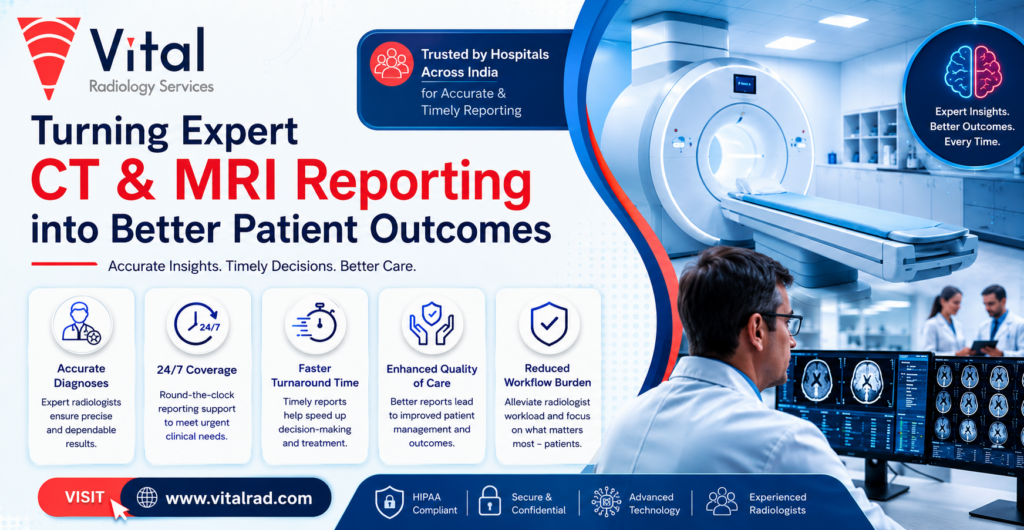
Expert CT and MRI reporting helps solve this challenge. Accurate and timely reports give doctors clear information to plan the right treatment. Faster results mean patients can start care sooner. When report quality and speed improve, hospitals can deliver safer, more efficient care and support better patient outcomes.
Why Accurate & Timely Reporting Matters
Accurate and timely CT and MRI Reporting play a vital role in guiding patient care. They help doctors make confident decisions, reduce uncertainty, and ensure that treatment begins without unnecessary delay.
- Imaging reports form the foundation of clinical decisions, helping doctors understand the exact nature and extent of a condition.
- Clear and precise findings allow specialists to plan the right treatment at the right time.
- Timely reporting ensures faster diagnosis, which is especially important in emergencies and critical care cases.
- Delays in reports can slow down treatment plans, affecting patient recovery and overall outcomes.
- Errors or unclear interpretations may lead to misdiagnosis, which can result in incorrect or delayed treatment.
- Inaccurate reports often require repeat scans, increasing costs and exposing patients to additional procedures.
- Faster turnaround times improve coordination between departments and enhance hospital efficiency.
- Reliable reporting builds trust among clinicians, enabling smoother collaboration in patient management.
- Early and accurate detection of diseases helps prevent complications and supports better long-term health.
- Consistent quality in reporting improves patient confidence and satisfaction with healthcare services.
Common Challenges Hospitals Face
Hospitals today face several practical challenges in delivering fast and accurate imaging reports. These issues can impact efficiency, increase pressure on staff, and affect the overall quality of patient care.
Shortage of Subspecialty Radiologists
- Many hospitals struggle to find radiologists with expertise in areas such as neurology and oncology.
- Complex cases like brain disorders or cancer require highly trained specialists for accurate interpretation.
- Limited availability of these experts can lead to delays in reviewing advanced imaging studies.
- Smaller hospitals and rural facilities are especially affected due to restricted access to subspecialists.
- This gap often forces general radiologists to handle complex cases, which may reduce reporting precision.
Longer Turnaround Times During Nights and Emergencies
- Imaging demand continues around the clock, but staffing is often limited during night shifts.
- Emergency cases require immediate reporting, yet delays can occur due to reduced workforce availability.
- Longer turnaround times can slow down critical decision-making in urgent situations.
- Fatigue during extended shifts may also affect reporting speed and consistency.
- Delayed reports in emergency settings can impact timely treatment and patient flow.
Workload and Cost Burden on In-House Teams
- Increasing imaging volumes place significant pressure on existing radiology teams.
- High workload can lead to burnout, affecting both productivity and report quality.
- Hospitals must invest heavily in hiring, training, and retaining skilled radiologists.
- Maintaining a full in-house team adds to operational costs, especially for round-the-clock coverage.
- Balancing quality, speed, and cost becomes a constant challenge for healthcare providers.
How Expert CT/MRI Reporting Improves Outcomes
Expert CT and MRI reporting plays a direct role in improving patient outcomes by ensuring speed, accuracy, and consistency in diagnosis. With the right expertise and timely insights, hospitals can deliver better care while reducing risks and delays.
Faster Diagnosis Leads to Faster Treatment
- Expert reporting ensures that critical findings are identified quickly, allowing doctors to act without delay.
- In emergency conditions such as stroke or trauma, every minute matters, and rapid reporting can significantly improve recovery chances.
- Early detection of life-threatening conditions helps initiate treatment at the right time.
- Quick turnaround times reduce waiting periods for patients and clinicians.
- Faster diagnosis supports smoother patient flow, especially in busy emergency departments.
Subspecialty Expertise Reduces Errors
- Access to radiologists with focused expertise in areas like neuroimaging or oncology improves report accuracy.
- Specialists are better equipped to identify subtle or complex findings that may be missed otherwise.
- Accurate interpretation reduces the chances of misdiagnosis and incorrect treatment plans.
- High-quality reporting enhances clinical confidence across departments.
- Consistent expertise ensures reliable outcomes even in challenging cases.
Second Opinions Improve Clinical Confidence
- Expert reporting services often include access to second opinions for complex cases.
- A fresh review helps validate findings and ensures nothing is overlooked.
- Multiple expert insights support better-informed clinical decisions.
- Second opinions reduce uncertainty for both doctors and patients.
- This collaborative approach strengthens trust in diagnosis and treatment plans.
24/7 Reporting Ensures Continuous Care
- Round-the-clock reporting services eliminate delays during nights, weekends, and holidays.
- Emergency cases receive immediate attention regardless of the time.
- Continuous availability supports faster decision-making in critical care situations.
- Hospitals can maintain consistent service quality without overburdening in-house teams.
- Reliable 24/7 support ensures there are no gaps in patient care delivery.
Fewer Repeat Scans Save Cost and Reduce Exposure
- Accurate initial reports minimize the need for repeat imaging studies.
- Reducing repeat scans helps lower healthcare costs for both patients and hospitals.
- Patients benefit from less radiation exposure, especially in CT imaging.
- Efficient reporting improves overall resource utilization within the hospital.
- Clear and precise findings reduce confusion and the need for additional tests.
Role of Teleradiology
Teleradiology enables hospitals to access expert imaging support efficiently, securely, and without geographical limitations.
Secure and Compliant Global Access
- Teleradiology platforms use strong encryption to protect patient data during transmission and storage.
- Compliance with standards like HIPAA ensures patient information remains private and well protected.
- Secure systems allow hospitals to share imaging studies safely with experts across different locations.
- Radiologists can access and review cases remotely without compromising data confidentiality.
- This secure approach builds confidence among healthcare providers and supports responsible data handling.
Subspecialty Expertise Without Infrastructure Costs
- Hospitals can consult subspecialty radiologists without hiring full-time specialists on-site.
- There is no need to invest in additional infrastructure or advanced imaging interpretation systems.
- Teleradiology provides access to expertise in areas like neuroimaging and oncology when needed.
- Smaller hospitals benefit by handling complex cases without expanding internal resources.
- Flexible support helps hospitals manage workload efficiently while controlling operational costs.
Faster Reporting and Operational Efficiency
- Teleradiology networks distribute cases across multiple experts, improving turnaround times.
- Night and emergency reporting becomes faster with dedicated remote radiology teams.
- Reduced workload allows in-house staff to focus on critical tasks and patient care.
- Quick reporting supports timely diagnosis and better clinical decision-making.
- Improved efficiency enhances coordination between departments and overall hospital performance.
How Vital Radiology Supports Better Outcomes
- Vital Radiology offers access to experienced radiologists across multiple subspecialties.
- Our services ensure accurate and timely reporting for both routine and complex cases.
- We maintain strong data security practices aligned with healthcare compliance standards.
- Hospitals benefit from consistent reporting quality without increasing infrastructure costs.
- Our support helps improve patient outcomes through faster diagnosis and confident treatment decisions.
Conclusion
Accurate and timely CT and MRI reporting plays a crucial role in improving patient outcomes. From faster diagnosis in critical situations to reduced errors through subspecialty expertise, expert reporting helps hospitals deliver better, safer, and more efficient care. With growing imaging demands, solutions like teleradiology ensure continuous support, reduce workload on in-house teams, and enhance overall clinical confidence.
Partnering with a trusted provider like Vital Radiology allows hospitals to access high-quality, expert reporting without added operational burden. Their reliable, secure, and round-the-clock services help bridge gaps in expertise and speed, ensuring patients receive the right care at the right time. Exploring such expert support can be a valuable step toward strengthening your hospital’s diagnostic capabilities and patient care standards.