
Early and accurate cancer detection can make a life-changing difference. The stage at which cancer is identified often determines the treatment options, the chances of recovery, and overall patient outcomes. This makes precise diagnosis and staging not just important, but essential. As cancer can behave differently in every individual, doctors rely on advanced tools to see beyond symptoms and understand the disease more clearly.
Imaging plays a vital role in this process by helping detect tumors, track their spread, and guide treatment decisions. Among modern techniques, PET CT stands out as a powerful diagnostic tool. By combining functional and structural imaging, it provides detailed insights that support better planning, timely intervention, and more personalized cancer care.
Understanding PET-CT Scan in Cancer Care
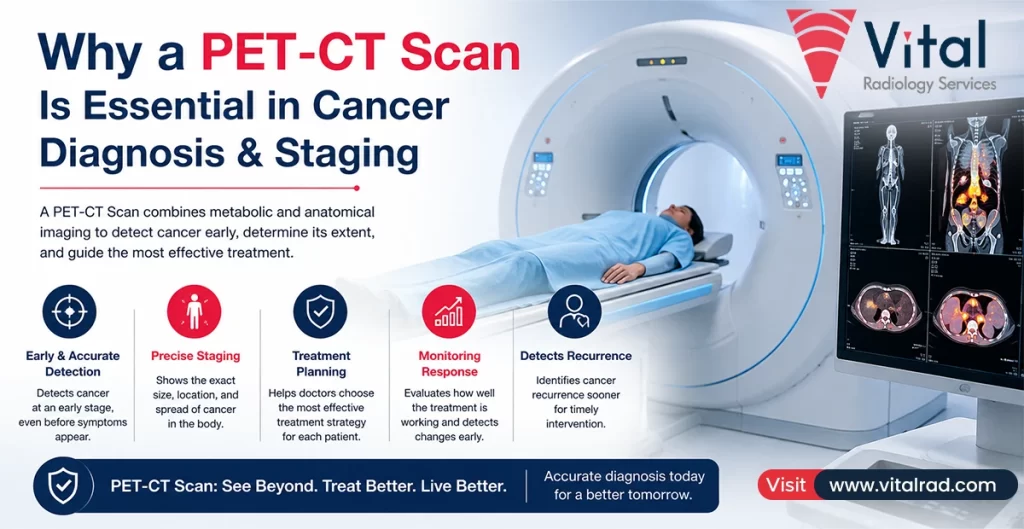
A PET-CT scan is an advanced imaging test used widely in cancer care. It combines two technologies, Positron Emission Tomography (PET) and Computed Tomography (CT), to provide detailed information about the body. While CT shows the structure of organs and tissues, PET highlights how these tissues are functioning at a cellular level.
This combination allows doctors to see both the location and activity of abnormal cells in a single scan. PET detects areas with high metabolic activity, which is often a sign of cancer, while CT provides clear anatomical details. Together, they create a more complete and accurate picture of what is happening inside the body.
Compared to conventional imaging methods, PET-CT offers deeper insights. It can detect changes earlier, identify the exact spread of cancer, and help differentiate between active disease and scar tissue, leading to better diagnosis and treatment planning.
Why PET CT Scan Is Essential for Cancer Diagnosis
PET CT scans play a crucial role in modern cancer diagnosis by offering detailed and accurate insights that go beyond conventional imaging methods. They help doctors detect, assess, and understand cancer more effectively.
- Detecting Cancer at an Early Stage: PET-CT can identify abnormal cellular activity even before structural changes become visible, allowing for earlier diagnosis and timely treatment.
- Identifying Active Cancer Cells with High Accuracy: By highlighting areas with increased metabolic activity, PET-CT helps pinpoint actively growing cancer cells with greater precision.
- Locating Hidden or Difficult-to-Detect Tumors: This scan can reveal tumors that may not be visible through standard imaging, especially in complex or deep areas of the body.
- Differentiating Cancerous and Non-Cancerous Abnormalities: PET-CT helps distinguish between malignant growths and benign conditions, reducing the chances of misdiagnosis and unnecessary treatments.
Why PET CT Scan Is Crucial for Accurate Cancer Staging
A PET CT scan plays a key role in accurately staging cancer and guiding the right treatment plan.
Determining the Exact Extent of Disease
A PET-CT scan helps doctors clearly understand how far the cancer has spread within the body. It combines functional and structural imaging, allowing specialists to see both tumor activity and its precise location. This makes it easier to define the stage of cancer and plan appropriate treatment.
Assessing Lymph Node Involvement
Cancer often spreads to nearby lymph nodes, which can change the stage and treatment approach. PET CT scans detect abnormal metabolic activity in lymph nodes, even before they appear enlarged. This improves accuracy in identifying affected nodes and avoids unnecessary procedures.
Detecting Distant Metastasis Throughout the Body
One of the biggest advantages of PET-CT is its ability to scan the entire body in a single session. It helps identify whether cancer has spread to distant organs such as the liver, lungs, or bones. Early detection of metastasis ensures timely and more effective treatment decisions.
Providing Comprehensive Whole-Body Cancer Evaluation
PET-CT offers a complete overview of cancer in one scan. It reduces the need for multiple tests and provides detailed insights into disease activity. This comprehensive evaluation supports better staging, treatment planning, and monitoring of response to therapy.
How PET CT Influences Cancer Treatment Decisions
A PET-CT scan helps doctors make better and more informed cancer treatment decisions.
Guiding Personalized Treatment Planning
PET CT provides detailed information about tumor activity and spread. This helps doctors design a treatment plan tailored to the patient’s specific condition, improving the chances of better outcomes.
Helping Doctors Choose the Most Appropriate Therapy
By showing how active and widespread the cancer is, PET-CT helps doctors decide between options like surgery, chemotherapy, targeted therapy, or immunotherapy. This ensures the chosen treatment is suitable and effective.
Avoiding Unnecessary Procedures and Surgeries
PET CT can reveal if cancer has already spread to other parts of the body. This helps avoid surgeries or procedures that may not be beneficial, reducing patient risk and discomfort.
Supporting Radiation Therapy Planning
PET CT helps identify the exact location of active cancer cells. This allows doctors to target radiation more precisely, protecting healthy tissues and improving treatment accuracy.
The Role of PET CT in Monitoring Cancer Progression
A PET-CT scan is highly valuable in monitoring cancer progression and evaluating how the disease responds over time.
Evaluating Response to Chemotherapy and Radiation
PET-CT helps doctors assess how well cancer is responding to treatments such as chemotherapy and radiation therapy. It detects changes in the metabolic activity of cancer cells, often before physical shrinkage is visible. This early insight allows doctors to continue, adjust, or change treatment plans for better effectiveness and improved patient outcomes.
Detecting Residual Disease After Treatment
After completing treatment, it is important to know if any cancer cells remain in the body. PET CT scans can identify small areas of active disease that may not be visible on conventional imaging. This helps ensure that any remaining cancer is detected early and managed promptly, reducing the risk of further spread.
Identifying Cancer Recurrence at an Early Stage
PET CT is highly sensitive in detecting cancer recurrence, even before symptoms develop. Early identification of returning cancer allows timely medical intervention, which can significantly improve treatment success and long-term survival.
Types of Cancer Where PET CT Plays a Key Role
PET-CT scans are widely used across many types of cancers for accurate diagnosis, staging, and monitoring.
Lung Cancer: PET-CT helps detect tumors, assess spread, and guide treatment decisions with high accuracy.
Lymphoma: It is essential for staging and monitoring response to therapy in both Hodgkin and non-Hodgkin lymphoma.
Breast Cancer: PET-CT identifies metastasis and evaluates treatment response in advanced or recurrent cases.
Colorectal Cancer: It helps detect recurrence and distant spread, especially to the liver and lungs.
Head and Neck Cancers: PET-CT locates primary tumors and assesses lymph node involvement effectively.
Other Common Malignancies: It is also useful in cancers like melanoma, thyroid, and esophageal cancer for whole-body evaluation.
Key Advantages of PET CT Over Conventional Imaging Methods
A PET-CT scan offers several important advantages over conventional imaging methods in cancer care.
Higher Diagnostic Accuracy
PET-CT combines functional and anatomical imaging, allowing doctors to detect both the structure and activity of cancer. This dual approach improves accuracy in identifying malignant tissues and reduces the chances of false results.
Earlier Detection of Disease Spread
Unlike traditional scans, PET-CT can identify changes at the cellular level before structural changes appear. This helps detect the spread of cancer at an earlier stage, enabling timely intervention and better treatment outcomes.
Better Staging Confidence
Accurate staging is essential for planning treatment. PET-CT provides a clear and detailed picture of tumor size, location, and spread throughout the body. This gives doctors greater confidence in determining the exact stage of cancer.
Improved Clinical Decision-Making
With more precise and comprehensive information, PET CT supports better clinical decisions. It helps doctors choose the most effective treatment, avoid unnecessary procedures, and monitor progress more efficiently, leading to improved patient care.
Why Timely PET CT Scanning Can Improve Cancer Outcomes
Timely PET CT scanning plays a crucial role in improving cancer outcomes by enabling early and informed medical decisions.
Faster Diagnosis and Treatment Initiation
PET-CT helps detect cancer and its spread at an early stage, often before symptoms worsen. This allows doctors to confirm the diagnosis quickly and begin treatment without delay. Early initiation of therapy can prevent disease progression and improve overall prognosis.
Enhanced Treatment Effectiveness
By providing detailed insights into tumor activity, PET-CT helps doctors choose the most appropriate and targeted treatment. When treatment starts at the right time and is well-matched to the disease stage, it increases the chances of a better response and recovery.
Better Long-Term Disease Management
Regular and timely PET-CT scans help monitor the disease over time. They assist in detecting any changes, recurrence, or complications early. This supports ongoing treatment adjustments and helps maintain better control over the disease, leading to improved long-term survival and quality of life.
Choose Vital Radiology for PET-CT Scans
Choosing the right diagnostic center is essential for accurate cancer evaluation, and Vital Radiology stands out for its quality and reliability. With advanced PET-CT imaging technology, the center ensures high-resolution scans that provide detailed insights into cancer detection, staging, and monitoring. This modern approach helps doctors make well-informed treatment decisions with greater confidence.
At Vital Radiology, a team of experienced radiologists plays a key role in delivering accurate interpretations. Their expertise allows them to identify even subtle abnormalities and provide clear, clinically relevant findings. Combined with precise and timely diagnostic reporting, patients and doctors receive results quickly, helping avoid delays in starting or adjusting treatment.
The center is committed to diagnostic excellence, focusing on patient care, accuracy, and efficiency. From advanced equipment to expert analysis, every step is designed to support better health outcomes. This dedication makes Vital Radiology a trusted choice for PET CT scans and comprehensive cancer imaging.
Conclusion
PET CT scans play a critical role in modern cancer care by providing accurate information for diagnosis, staging, and treatment planning. By combining functional and structural imaging, they help detect disease early, assess its spread, and monitor response to therapy with greater precision. This level of clarity allows doctors to make confident decisions and tailor treatments to each patient’s needs.
Accurate imaging is essential for successful cancer outcomes, and timely evaluation can make a meaningful difference. If advised by your doctor, do not delay getting a PET-CT scan. Choosing a trusted diagnostic center ensures reliable results and better care. Taking this step early can support effective treatment, improve recovery chances, and give you greater control over your health journey.